Podiatrist & Chiropodist in Tunbridge Wells (TN1/TN2/TN4)
This page sets out what a private HCPC-registered podiatry clinic in Royal Tunbridge Wells would treat, what it would cost, and how it would sit alongside Kent Community Health's NHS service. Tunbridge Wells is a planned expansion site with no room and no opening date, so nothing can be booked yet. If you would come, register interest.
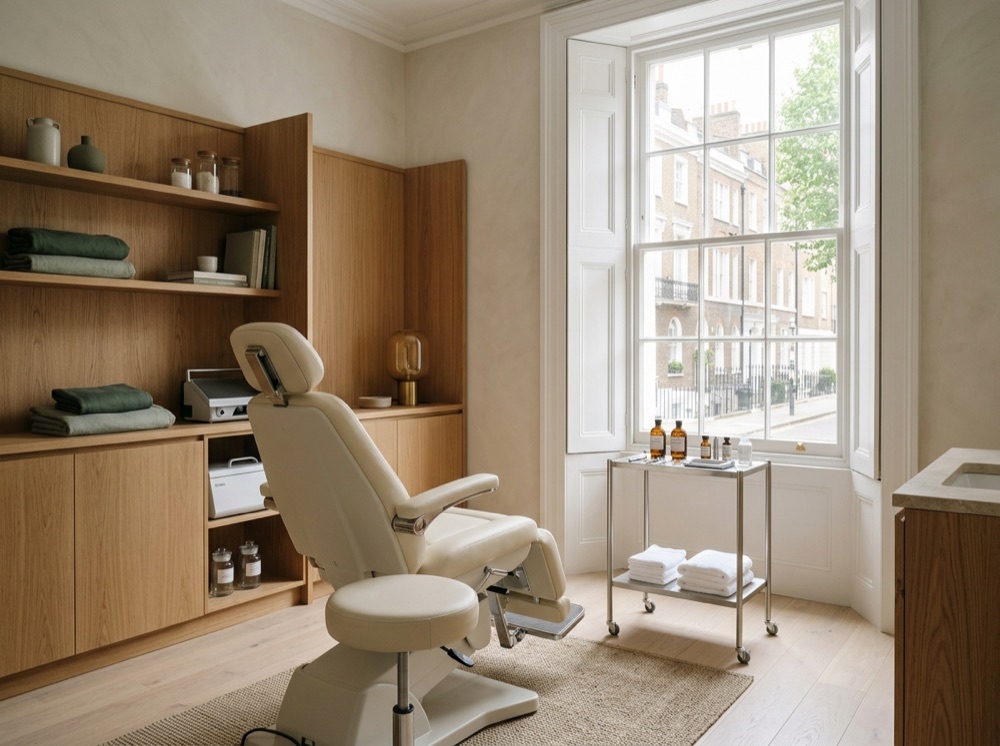
Care in Tunbridge Wells.
Designed around TN1, TN2 and TN4: older residents of Rusthall, Southborough and St John's keeping their feet in good order, walkers who spend weekends on the High Weald paths, and London commuters whose office shoes are causing forefoot pain.
Regular nail and hard-skin upkeep
Toenails that have grown thick, curved or fungal thinned with a dust-extracting drill; corns lifted out and callus pared back; dry, split heels treated — on a schedule that suits you.
Ball-of-foot pain
Assessment for metatarsalgia, Morton's neuroma and plantar plate strain, with padding, footwear changes and, where needed, orthoses or a referral for imaging.
Walkers' toes and nails
Bruised, thickened and ingrowing nails from downhill walking treated, with advice on boot fit, lacing and sock choice for the Weald's footpaths.
Diabetic and circulation checks
Doppler and monofilament screening and careful nail care between NHS reviews, with a direct route back to the NHS if anything needs urgent attention.
Forefoot pain and the commuter's shoe
A common story in a commuter town: pain under the ball of the foot that feels like walking on a pebble or a fold in the sock, sometimes with tingling or numbness spreading into two toes. It is usually worse in narrow or heeled shoes and better barefoot. The cause might be general overload of the forefoot, irritation of a nerve between the toes (Morton's neuroma), or a strain of the ligament under a toe joint.
Telling them apart matters, because the treatments differ. At a first appointment a Podiatrist would press, squeeze and move the joints to find the source, look at the shoes you wear for work, and talk through what you do on your feet each day. Most people improve with a wider toe box, a small metatarsal pad and less time in the worst shoes. Persistent cases may need custom orthoses, an ultrasound scan or a referral on, and we would explain why.
Downhill miles: black toenails and ingrown edges
Walking the Common, the paths out towards Rusthall or a longer day on the High Weald means plenty of descent. On every downhill step the foot slides forward and the toes meet the front of the boot. Over a long walk this bruises the nail bed, leaving a black toenail, and over months it thickens the nail and pushes its edges into the skin.
Prevention is simple and often overlooked: a boot with a thumb's width of room at the front, laces tightened over the instep before a descent so the heel stays back, nails cut straight across and not too short, and socks that do not bunch. If a nail has already started ingrowing, the spike can usually be cleared at a first visit. For nails that keep coming back, partial nail avulsion with phenol under local anaesthetic is a permanent solution, and walking is normally comfortable again within a couple of weeks.
Regular care in later life
For many older people the right podiatry is not a one-off fix but a steady routine: nails thinned, corns lifted out and callus pared back every couple of months so that walking stays comfortable. Routine care like this is one of the most effective ways to keep someone independent and confident on their feet.
We would write to your GP, with your consent, if we found weak pulses, loss of sensation or a skin change worth checking. And because many appointments here would be arranged by adult children for a parent, the priority list takes a contact for a relative or carer as well as for the patient.
The NHS route in Tunbridge Wells, and where private care fits
Kent Community Health NHS Foundation Trust provides community podiatry for patients whose health conditions threaten their feet, plus some ingrown toenail surgery and heel and tendon problems, and you can self-refer if you are registered with a GP. Hospital care, including emergencies, is at Tunbridge Wells Hospital in Pembury, run by Maidstone and Tunbridge Wells NHS Trust. If you are already under either, stay with them and let us know.
Private podiatry is for everything that falls outside those criteria, or for people who would rather choose their own appointment time and Podiatrist. It needs no referral, and we would always tell you if the NHS, or the trust's cheaper nail-cutting service, would suit you better.
Planned Tunbridge Wells fees.
| Appointment | Fee |
|---|---|
| First appointment: assessment plus treatment (40 minutes) Health and medicines review, pulses and sensation tested, then nails, skin or corns treated straight away | £70–£75 |
| Ongoing foot care (30 minutes) Regular nail reduction, corns, hard skin, split heels and nail care for people with diabetes | £58–£65 |
| Ingrowing toenail surgery — partial nail avulsion Toe numbed with local anaesthetic, phenol to stop regrowth, sterile pack, dressings and two aftercare reviews | £395 |
| Gait analysis with custom 3D-scanned orthotics Walking and footwear assessment, 3D scan, one pair of made-to-prescription devices, fitting and a check-up | From £395 |
Planned fees for a Tunbridge Wells clinic that is not open. Nothing is charged now, and final prices would be confirmed in writing before you are offered a date.
Read next
Tunbridge Wells — straight answers
Can I book a podiatrist in Tunbridge Wells with you today?
No. Tunbridge Wells is a planned expansion site with no room or date. Register priority interest and we will contact you only if a clinic here is confirmed.
Why does my black toenail keep coming back after walks?
Usually because the toes hit the front of the boot on descents. Better boot fit and lacing normally stop it; a Podiatrist can check both the nail and the boot.
Do I need an X-ray for ball-of-foot pain?
Often not. A careful examination usually points to the cause. If it does not, or the pain will not settle, a scan may be worth discussing with your GP.
Can my daughter register on my behalf?
Yes. Give her contact details and yours, and tell us in the notes anything that affects travel, such as a walking aid or needing a lift.
Will the planned Tunbridge Wells fees change?
They are our current plan. Any change would be confirmed in writing before an appointment is offered, and nothing is taken in advance.
Podiatry planned for Tunbridge Wells. Without the wait.
Planned expansion site for HCPC Podiatry in TN1, TN2 and TN4. Free to register and nothing is booked — it simply helps us decide whether to open here.